
FOOTNOTE: EPD DAILY ACTIVITY REPORT information was provided by the EPD and posted by the City-County-County Observer without opinion, bias, or editing.

FOOTNOTE: EPD DAILY ACTIVITY REPORT information was provided by the EPD and posted by the City-County-County Observer without opinion, bias, or editing.

Senate Bill 291, authored by Sen. Scott Baldwin, R-Noblesville, would establish a specialized court security unit for the Indiana Supreme Court, the Court of Appeals of Indiana and the Indiana Tax Court. These court marshals would attend court proceedings, provide security at events, such as judicial conferences and community outreach programs, and maintain a security system at the Statehouse, in judicial staff offices, and at the homes of the justices and judges.
Presenting the bill to the Senate Judiciary Committee on Jan. 14, Baldwin said the court marshals “would ensure Indiana’s judges can carry out their constitutional responsibilities without fear, intimidation or disruption.”
On Thursday, the Senate amended SB 291 to protect the personal information of judges and their families from being disclosed to the public. Judges in the state and federal district courts in Indiana would be covered, along with their spouses and children who reside in the same household. The personal information that would be private includes home addresses, phone numbers, email addresses, license plate numbers or other unique identifiers of a vehicle, Social Security numbers, birth or marital records, and election and campaign finance reports.
Also, the amendment makes the unlawful publication of the personal information a Class A misdemeanor.
Introducing the amendment on the Senate floor, Baldwin indicated the provision was added in response to the wounding of Tippecanoe County Superior Court Judge Steven Meyer and his wife in a shooting at their home in Lafayette on Jan. 18. The amendment passed on a voice vote.
SB 291 passed its third reading unanimously in the full Senate Monday and now heads to the Indiana House.
Increasing threats toward judiciary
A day after the Senate amended the legislation, Indiana Chief Justice Loretta Rush and Tippecanoe County Circuit Court Judge Sean Persin led a security webinar for state judges. Security expert James Hamilton joined the 30-minute discussion and nearly 200 judges attended virtually.
“An attack on a judge is not just an attack on that judge,” Rush said during the webinar. “It’s really an attack on our free society and the critical role the judiciary plays in securing that.”
The webinar was broadcast from Judge Meyer’s courtroom in the Lafayette courthouse.
Meyer and his wife, Kim, were shot on the afternoon of Jan. 18 by a man who showed up at their private residence and fired two shotgun blasts through the closed front door, according to reporting by Based in Lafayette. The attack wounded Meyer and his wife.
Based in Lafayette reported that Kim Meyer was treated for a wound to her hip and released Sunday evening. Meyer sustained an injury to his arm and was transported to an Indianapolis hospital for treatment.
“His left arm is badly injured and will require additional surgeries and most likely a long rehab,” Kim Meyer told Based in Lafayette. “It could have been so much worse, though.”
After a manhunt that included Lafayette Police and Indiana State Police, the FBI, U.S. Marshals Service, and law enforcement in Lexington, Kentucky, and Allentown, Pennsylvania, five people have been arrested and charged in connection to the shooting, according to Based in Lafayette. Court documents, cited by Based in Lafayette, linked the attack to an alleged conspiracy involving Thomas Moss, 43, of Lafayette, who is a high-ranking member of the Phantom Motorcycle Club and had been scheduled to go on trial in Meyer’s court on Jan. 20.
Chief Justice Rush has been vocal about growing hostilities in courtrooms and increasing threats toward judges. People appearing in court are using foul language toward the judges, attempting to intimidate them, being disrespectful, and getting into brawls, she said.
A December 2023 survey by the Indiana Supreme Court’s Office of Judicial Administration found that nearly three-quarters of state judges had been the target of a threat. Judges told the survey that litigants had brandished firearms, threatened to set them on fire and blow up their homes.
“Threats to the judiciary, in my time as a judge, are at an all-time high,” Rush said in October when the Indiana Supreme Court released its 2024-25 annual report. “I have judges that hear cases and sentence people with no security in the courtroom. So, it’s just dangerous.”
Bill’s provisions called ‘a minimum effort’
In 2025, Rush had sought from the Indiana General Assembly $1.5 million in additional funding for court security. The chief justice said she envisioned the money being used to create a matching grant program, which the trial courts could tap into to help fund protective measures like metal detectors or security guards.
The funding request was denied.
SB 291 would not require any additional appropriation from the legislature. Court of Appeals Judge Cale Bradford told the Senate Judiciary Committee that the Indiana Supreme Court already has its own security staff, and former Gov. Eric Holcomb had previously obtained funding for a security unit for the appellate court.
However, Bradford said, state statute needs to be updated to expand the security provision to include the Court of Appeals.
“We’re not looking to get any other police department’s business,” Bradford told the committee. “We just want to maintain the security for the people that are with us, meaning the kids at the schools, the public, and our judges and our staff.”
Some members of the Judiciary Committee were taken aback that the appellate courts did not have security. Sen. Jim Buck, R-Kokomo, said he was shocked to find out the judiciary did not have protection, especially since the speaker of the House and the Senate president pro tempore do have that.
Sen. Sue Glick, R-LaGrange, is an attorney and former LaGrange County prosecutor. Before casting her vote in support and asking the author to add her name to the bill, she told the committee she had clerked for the Court of Appeals early in her legal career.
“It surprised me then and it surprises me now that we haven’t taken this step,” Glick said. “Most of these judges comes from the trial court. They’ve left behind them people they’ve sent to jail who may have an ax to grind. This is a minimum effort, I believe, but it is a good first step in protecting them.”
This article was published by TheStatehouseFile.com through a partnership with The Indiana Citizen, a nonpartisan, nonprofit platform dedicated to increasing the number of informed, engaged Hoosier citizens.
Marilyn Odendahl has spent her journalism career writing for newspapers and magazines in Indiana and Kentucky. She has focused her reporting on business, the law and poverty issues.
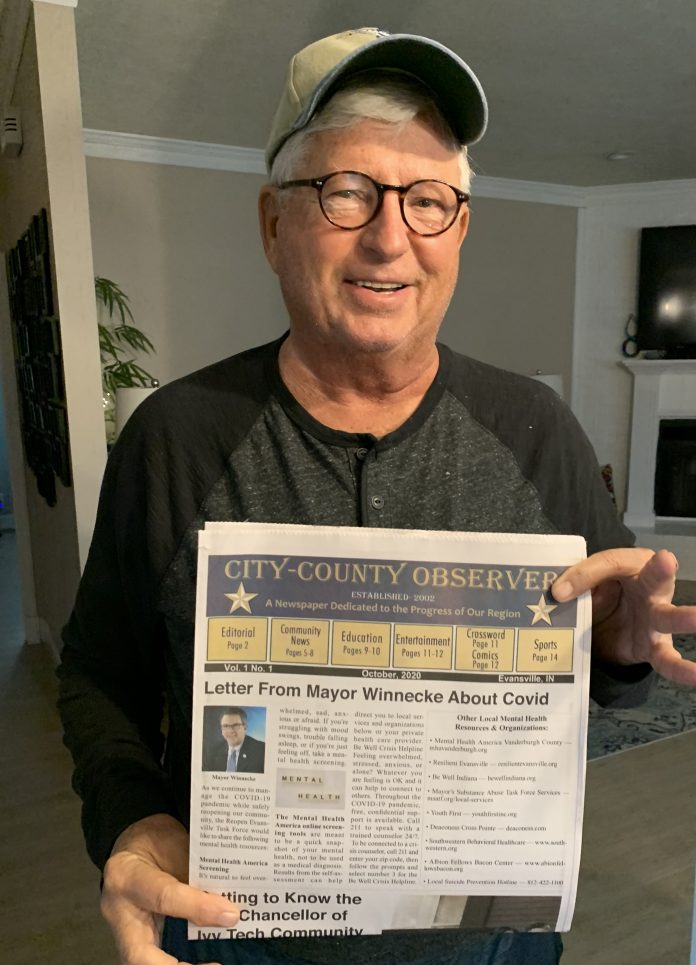
For over two decades, the City-County Observer has been a recognizable and trusted name in local digital journalism. Built during a time when community-focused reporting mattered most, the Observer established itself as a platform for government transparency, civic dialogue, and independent reporting. Today, it presents a rare opportunity: the chance to acquire a legacy online newspaper with an established brand, existing readership, and significant growth potential.
A Recognized Name with Community Credibility
The City-County Observer is not a startup—it is a known entity. The name carries weight in the community, particularly among readers who value local government coverage, public accountability, and independent commentary. In an era when local journalism is disappearing, this publication represents something increasingly rare: brand recognition tied to civic trust.
For the right buyer, the City-County Observer is more than a website—it is a foundation. One that can be revitalized, expanded, and positioned for long-term success in the future of local media.
If interested, please contact citycountyobserver@live.com, or 8127748012

It is with a heavy heart that we share this message with everyone who has followed the City-County Observer for more than two decades. As of February 1, 2026, there will be no further publications of the City-County Observer.
With Ron’s passing, continuing his legacy has been incredibly difficult. This paper was truly his passion, and it meant a great deal to him to keep the community informed.
We are deeply grateful to all who supported and read the paper over the years, especially those who enjoyed “Is It True?” and the many articles that sparked conversation and kept readers engaged.
As we close this chapter, we do so with a salute to Ron and the work he dedicated so much of his life to.

By Michael Hicks, Indiana Capital Chronicle
Indiana’s Senate Enrolled Act 1 of 2025 delivered what many voters have wanted for years: lower property taxes. Homeowners received higher deductions, but businesses — especially those with substantial personal property — saw significant reductions in tax liability.
Let’s compare the two. A family who owns a $400,000 house would see a $300 cut, the maximum, each year. A business that owns $400,000 worth of personal property would see their taxes cut by $12,000 a year.
In the short run, these changes might be popular. In the long run, however, they will likely weaken municipal governments across the state and undermine the very economic growth the law was meant to encourage.
Property taxes are not simply another revenue source. They are the primary funding mechanism for local government in Indiana. Police and fire protection, street maintenance, parks, libraries, and much of public education depend on property tax revenue. When those revenues fall, local governments do not gain new efficiencies by default; they lose capacity.
SEA 1 reduces assessed values and effective tax rates across much of the property tax base. While the legislation phases in these changes, the cumulative effect is substantial. Cities and towns will collect significantly less revenue over the coming decade, even after accounting for modest economic growth. This is not speculative. Local fiscal officers across Indiana have already projected sizable structural deficits as the law takes effect.
While homeowners receive modest, broadly distributed relief, the most dramatic change are sweeping business tax cuts.
The design of SEA 1 matters. While homeowners receive modest, broadly distributed relief, the most dramatic change are sweeping business tax cuts. In many communities, this removes a large share of the commercial tax base entirely. The result is a sharp decline in taxable value that cannot be offset by growth alone.
Supporters of the law argue that local governments can replace lost revenue through local income taxes. That option exists, but it is far from costless. Local income taxes are paid by workers, not property owners, and they are far more sensitive to economic cycles. Communities with slower job growth or lower incomes will struggle to raise sufficient revenue, even at higher rates. Others will simply choose not to increase taxes, forcing cuts instead.
These tradeoffs are not evenly distributed. Large cities with diverse tax bases may absorb some of the loss. Small cities and towns cannot. For many rural and mid-sized communities, even modest revenue reductions translate into fewer police officers, delayed infrastructure maintenance, or closed public facilities. Over time, those cuts accumulate.
The economic consequences of this erosion are well-documented. Public safety, infrastructure quality, and school performance are among the strongest predictors of local economic growth. Businesses do not locate in places with crumbling roads, understaffed emergency services, or struggling schools simply because taxes are low. They locate where public services are reliable and labor markets are strong.
The fallout of this will happen fairly soon. I expect close to 100 municipal governments will declare fiscal emergencies because personnel cuts will be so dramatic. But, there is a grimly humorous side of this. The number of Indiana local government employees is near a record low, and lower than in every year before 2020 for which we have data.
This brings us to education. While the state now provides most operating funding for K-12 schools, property taxes still play a critical role in capital projects and transportation. Reduced local revenue means deferred maintenance, fewer facility upgrades, and growing disparities between districts. Over time, this affects workforce quality—Indiana’s most important long-term economic asset.
The lesson here is not that tax relief is inherently harmful. Indiana’s earlier property tax reforms succeeded because they were paired with stable replacement revenues and realistic assessments of local fiscal capacity. SEA 1 breaks from that tradition. It cuts deeply into the local tax base without providing a durable, statewide mechanism to replace what is lost.
Fiscal policy is ultimately about tradeoffs. Lower property taxes today mean fewer public services tomorrow. If those services are central to economic growth—and they are—then the policy choice becomes clearer. Indiana has managed to a few hundred dollars per household in the short run at the cost of weaker communities and slower growth in the years ahead.
The second grimly funny aspect of this is that with these lopsided property tax cuts, local governments are going to have to raise local income taxes. SEA1 was hastily put together, and relied so heavily on a study that favored business interest over objective fact. The result was a huge business tax cut that will almost surely cause an overall tax increase for most families.
Hoosier families need to think long and hard about the fallout of SEA1, and have some frank conversations with both businesses and legislators about the state’s future.


Eligibility Assistant – Front Desk |
|||
|
|||
| Evansville, IN | |||
|
|||
|
|||
| This position will provide general office support and assistance for case workers and clients applying for public assistance. Answer and direct incoming calls. | |||
| 6 days ago |
Eligibility Assistant – Front Desk |
|||
|
|||
| Evansville, IN | |||
|
|||
|
|||
| This position will provide general office support and assistance for case workers and clients applying for public assistance. Answer and direct incoming calls. | |||
| 6 days ago |
Front Desk Agent |
||
|
||
| Newburgh, IN | ||
|
||
|
||
| Specifically, we are looking for someone to work the evening shift, 3p-11p.*. Assists guests in the check in and check out procedure, as well as, throughout the… | ||
| 6 days ago |
Front Desk Associate |
|||
|
|||
| Evansville, IN | |||
|
|||
|
|||
| Some of the Front Desk Associate’s responsibilities include greeting customers, answering phones and routing calls to appropriate personnel, and completing… | |||
| Just posted |
Medical Office Assistant |
|||
|
|||
| Evansville, IN | |||
|
|||
|
|||
| Flexible work schedules – Full time/part time/supplemental – Day/Eve/Night. Onsite children’s care centers (Infant through Pre-K). | |||
| 4 days ago |
Customer Service Representative |
||
|
||
| Newburgh, IN | ||
|
||
|
||
| Position requires customer service skills, organization, multitasking, and data entry. Must be available to work weekday evenings and/or Saturday mornings. | ||
| Just posted |
Clerical Specialist |
|||
|
|||
| Newburgh, IN | |||
|
|||
|
|||
| In this vital role, you will be the backbone of our office operations, ensuring smooth administrative workflows and exceptional customer support. | |||
| 1 day ago |
Part-Time Sales Receptionist |
|||
|
|||
| Evansville, IN | |||
|
|||
| 401k retirement plan with vested employer match. Status: Part-Time (19-21 Hours Per Week). Schedule: 3 Days Per Week (Rotating). | |||
| 1 day ago |
Remote Medical Receptionist – Bilingual – $15.50/hour! | Starts 2/26/26 |
|||
|
|||
| United States | |||
|
|||
|
|||
| Any discovery of unauthorized completion, whether during or after the hiring process, will result in disqualification or termination. | |||
| 7 days ago |
Office Administrator |
|||
|
|||
| Owensboro, KY | |||
| We offer a range of services including: fire sprinkler systems, security systems, fire alarm and detection systems, special hazards systems, voice data systems… | |||
| 2 days ago |
Sales Admin. |
|||
|
|||
| Princeton, IN | |||
|
|||
|
|||
| Join a growing sales team in a full-time, on-site administrative support role. Pay: $20/hr | Schedule: Mon–Fri, 8:00am–4:45pm. | |||
| 1 day ago |
Administrative Assistant/Receptionist |
||
|
||
| Reed, KY | ||
|
||
|
||
| Accounting skills and knowledge of Excel and Quickbooks is a requirement. Paid Holidays upon hiring; Dental, Clinical Health/Wellness Program after 90 days of… | ||
| 7 days ago |
Elementary Secretary |
||
|
||
| Wadesville, IN | ||
|
||
|
||
| Minimum High School Diploma or Equivalent. Experience in an educational setting (preferred). Under the direct supervision of Principal to provide a wide variety… | ||
| 6 days ago |
Executive Assistant |
|||
|
|||
| United States | |||
|
|||
| 401k plan with a company match. The Executive Assistant supports the Senior Vice President of Sales by managing day-to-day administrative operations, enabling… | |||
| 3 days ago |
Senior Administrative Assistant |
|||
|
|||
| Evansville, IN | |||
|
|||
| Occasional irregular or extended hours may be required. Department:* Counseling and Psychological Services (CAPS). Assist clinicians with follow-up as needed. | |||
| 5 days ago |
Office Manager |
||
|
||
| Henderson, KY | ||
|
||
|
||
| Employee Assistance Program, Paid Time Off and Paid Holidays, Flexible Spending Account, and 401k with up to 4% company match. | ||
| 4 days ago |
Administrative Specialist |
|||
|
|||
| Henderson, KY | |||
|
|||
| 1/21/2026 (7:00 PM EST). EXECUTIVE BRANCH | FULL TIME | ELIGIBLE FOR OVERTIME PAY | 18A | 37.5 HR/WK. Transportation Cabinet | Department of Highways. | |||
| 4 days ago |
Sales Administrator |
||
|
||
| Newburgh, IN | ||
|
||
|
||
| Through Evolv’s shared services and VIV digital marketing capabilities, merchants boost volumes and create overall growth; this allows the Company to tackle… | ||
| 7 days ago |
Accounting & Administrative Support Specialist |
||
|
||
| Evansville, IN | ||
|
||
|
||
| 401(k) retirement plan with company match. Assist with job costing by entering, tracking, and reconciling project costs, purchase orders, and labor hours. |