


CenterPoint Energy prepared for weekend winter weather in southwestern Indiana

Company monitoring conditions and has cold weather action plan in place
NWS forecasting sub-zero wind chills to follow snow
Customers encouraged to visit Winter Energy Guide
EVANSVILLE, Ind. – Jan. 23, 2026 – With significant snowfall and bitter cold expected across southwestern Indiana this weekend according to the National Weather Service, CenterPoint Energy has its cold weather action plan in place and is prepared to maintain safe, reliable service.
CenterPoint prepares for winter weather through proactive measures that support reliable delivery of electric and natural gas service. This includes:
· checking critical systems and equipment ahead of cold weather events,
· coordinating with local agencies and emergency responders, and
· positioning crews to respond to potential service issues safely and quickly.
Preparing for the weekend
With heavy snow in the forecast—and sub-zero wind-chills expected to follow—many customers may find themselves spending more time indoors over the next few days. When temperatures drop, heating systems may work harder to keep homes comfortable. A few simple steps can help manage energy use and keep homes comfortable:
· Lower the thermostat. Small adjustments can reduce heating costs without sacrificing comfort.
· Open blinds during the day. Sunlight provides natural warmth; close them at night to keep heat in.
· Keep exterior vents clear. Check that outdoor vents and air intakes are not blocked by snow. Heating equipment needs proper airflow to operate safely.
· Change the furnace filter. A clean filter helps the heating system run efficiently.
· Have a storm kit ready. Stock up on essentials and keep flashlights handy. Avoid candles, which pose a fire risk.
Customers with natural gas service should keep meters clear of snow by gently brushing them off with a broom. Shovels may cause damage.
Electric customers are encouraged to enroll in Power Alert Service® to receive outage updates, estimated restoration times and customer-specific information during severe weather. Customers can choose to receive updates via phone, text or email. Sign up at CenterPointEnergy.com/PowerAlertService.
Warming center locations and hours are available through Indiana 211. Call 2-1-1, text a ZIP code to 898-211 or visit IN211.org.
For additional safety tips and energy-saving ideas to help customers stay safe and warm this winter, visit CenterPoint’s Winter Energy Guide at CenterPointEnergy.com/ReadyforWinter.
Rep. O’Brien bill to protect victims of violent crime passes committee, gains community support
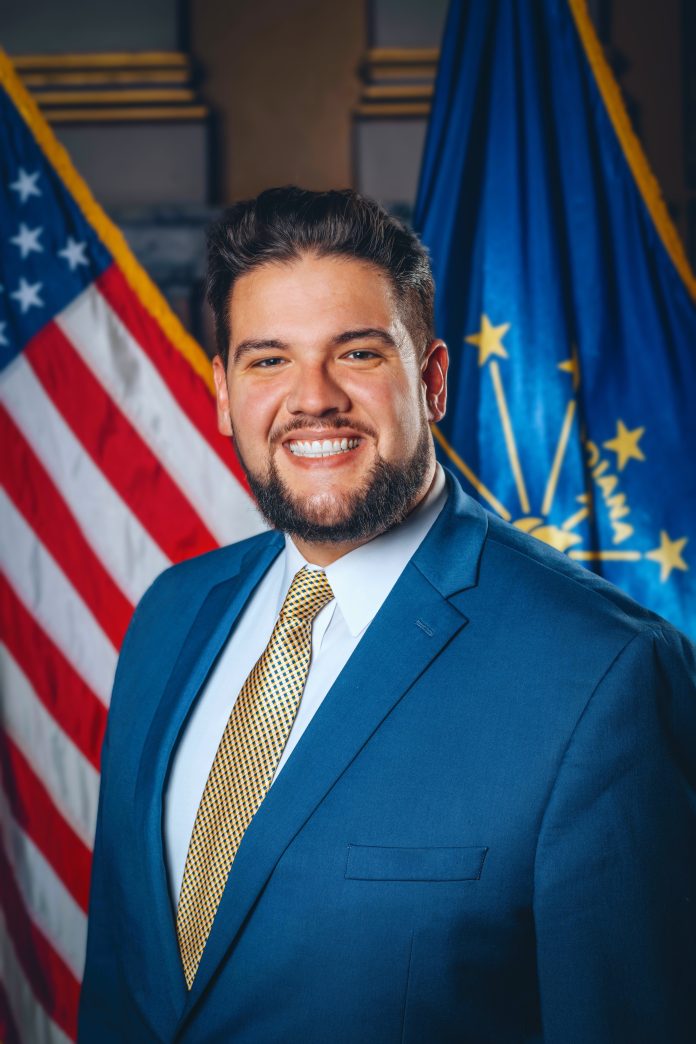
STATEHOUSE (Jan. 21, 2026) — A bill authored by State Rep. Tim O’Brien (R-Evansville) to increase notification requirements for crime victims prior to the release of a violent felon passed through the House Courts and Criminal Code Committee today.
O’Brien said he has received overwhelming community support for House Bill 1250, legislation aimed at strengthening protections for victims of violent crime through improved communication and transparency. The bill received bipartisan support from the committee, passing with a unanimous 13-0 vote.
HB 1250 creates clearer coordination between the Indiana Department of Correction and local law enforcement agencies. The IDOC would provide a seven-day advance electronic notice when a serious violent felon is scheduled for release. This notification would be sent to the sheriff, prosecuting attorney and chief of police in both the community where the offender will be relocating and the community where the original crime occurred. A court and prosecuting attorney would then notify any victims through Indiana’s Statewide Automated Victim Information & Notification program of the felon’s release.
O’Brien said that public response to the legislation has been swift and strong, with a petition supporting HB 1250garnering more than 2,000 signatures in just over a week. O’Brien authored the legislation after Evansville real estate agent Susan Haynie was allegedly killed last fall by a convicted violent offender who was released from prison just six months earlier.
“Our community continues to feel heartbreak from Susan Haynie’s tragic death,” O’Brien said. “This issue is near and dear to those of us who knew Susan and it carries significance for victims of violent crime across the state. This was a tragic situation where perhaps a simple notification could have made a difference.”
O’Brien said that he worked closely with Haynie’s family while crafting this legislation. They joined forces with a group of the perpetrator’s other victims to form the Susan Haynie Committee, advocating for stronger public safety measures and improved victim notification across Indiana.
“I offer this bill in memory of a friend, in support of victims and in the hope that better communication can prevent future tragedies,” O’Brien said.
The bill now moves to the full House of Representatives for consideration. To learn more about HB 1250 and follow session, visit iga.in.gov.
HOT JOBS

Front Desk Agent |
||
|
||
| Evansville, IN | ||
|
||
| Expected hours: 16 – 40 per week. Join our dynamic hospitality team as a Front Desk Agent, where your enthusiasm and exceptional customer service skills will… | ||
| 7 days ago |

Front Desk Agent |
||
|
||
| Newburgh, IN | ||
|
||
|
||
| Looking for hardworking and dedicated employees to join our team! *. Specifically, we are looking for someone to work the evening shift, 3p-11p.*. | ||
| 5 days ago |
Medical Office Assistant |
|||
|
|||
| Evansville, IN | |||
|
|||
|
|||
| We pride ourselves in retaining our top talent by offering work environments that support professional development and personal success. | |||
| 3 days ago |

Senior Administrative Assistant |
|||
|
|||
| Evansville, IN | |||
| 401(k) Savings Plan featuring a company match dollar-for-dollar up to 6% and a company contribution of 3% regardless of your contribution. We want you to know. | |||
| 3 days ago |
Eligibility Assistant – Front Desk |
|||
|
|||
| Evansville, IN | |||
|
|||
|
|||
| THIS POSITION IS LOCATED IN EVANSVILLE, INDIANA. Knowledge Services has a great opportunity for a strong customer service focused individual who wants to make a… | |||
| 5 days ago |
Medical Office Receptionist |
|||
|
|||
| Evansville, IN | |||
|
|||
|
|||
| Empathy: We seek out diverse perspectives and listen to learn without judgment. Additional benefits include a 401k retirement savings with employer match, paid… | |||
| 4 days ago |
Eligibility Assistant – Front Desk |
|||
|
|||
| Evansville, IN | |||
|
|||
|
|||
| THIS POSITION IS LOCATED IN EVANSVILLE, INDIANA. Knowledge Services has a great opportunity for a strong customer service focused individual who wants to make a… | |||
| 5 days ago |
Medical Front Office Staff |
|||
|
|||
| Evansville, IN | |||
|
|||
| Obtain and scan all insurance cards, Government issued Photo ID accurately matching legal name and perform Quality Check on each scanned image for legibility. | |||
| 7 days ago |
Clerical Specialist |
|||
|
|||
| Newburgh, IN | |||
|
|||
|
|||
| Expected hours: 30.0 per week. We are seeking a dynamic and highly organized Clerical Specialist to join our team! Pay: $16.00 – $21.00 per hour. | |||
| Just posted |
Part-Time Sales Receptionist |
|||
|
|||
| Evansville, IN | |||
|
|||
| 401k retirement plan with vested employer match. About Milan Laser Hair Removal. Milan Laser Hair Removal is one of the nation’s premier laser hair removal… | |||
| Just posted |
Administrative Assistant/Receptionist |
||
|
||
| Reed, KY | ||
|
||
|
||
| Expected hours: 30 – 36 per week. Seeking an enthusiastic, highly organized individual willing to learn at MC&I, Inc. in Reed KY (between Henderson, KY and… | ||
| 6 days ago |
Sales Assistant |
||||
|
||||
| United States | ||||
|
||||
|
||||
| This is a remote position, flexible hours (though some overlap with Eastern Time is needed) we are anticipating up to 40 hours per week, with hours varying… | ||||
| 3 days ago |

Office Administrator |
|||
|
|||
| Owensboro, KY | |||
| Premier Fire & Security, an APi Group Life Safety USA company, has an opening for a self-motivated individual to join our team as an Office Administrator. | |||
| 1 day ago |
Sales Admin. |
|||
|
|||
| Princeton, IN | |||
|
|||
|
|||
| Entry-Level Admin – Princeton, IN. Join a growing sales team in a full-time, on-site administrative support role. Reliable, eager to learn, and detail-oriented. | |||
| Just posted |
Elementary Secretary |
||
|
||
| Wadesville, IN | ||
|
||
|
||
| Minimum High School Diploma or Equivalent. Experience in an educational setting (preferred). Excellent Communication and Team Skills. | ||
| 5 days ago |
Senior Administrative Assistant |
|||
|
|||
| Evansville, IN | |||
|
|||
| Standard work hours are Monday through Friday, 8:00 a.m. until 4:30 p.m. Occasional irregular or extended hours may be required. EEO Job Group: *5 E6. | |||
| 4 days ago |
Office Manager |
||
|
||
| Henderson, KY | ||
|
||
|
||
| Employee Assistance Program, Paid Time Off and Paid Holidays, Flexible Spending Account, and 401k with up to 4% company match. | ||
| 3 days ago |
Hybrid/Remote Administrative Support Specialist |
|||
|
|||
| United States | |||
|
|||
|
|||
| This is an excellent job for an Administrative Operations Professional with extensive paperwork processing experience in the Wealth Management Industry.*. | |||
| 7 days ago |
Administrative Specialist |
|||
|
|||
| Henderson, KY | |||
|
|||
| 1/21/2026 (7:00 PM EST). $2,976.04 – $4,464.04 Monthly. EXECUTIVE BRANCH | FULL TIME | ELIGIBLE FOR OVERTIME PAY | 18A | 37.5 HR/WK. Gov or 270-826-4971. | |||
| 3 days ago |
Executive Assistant |
|||
|
|||
| United States | |||
|
|||
| All qualified applicants will receive consideration for employment without regard to race, color, ancestry, national origin, sex (including pregnancy,… | |||
| 2 days ago |
Accounting & Administrative Support Specialist |
||
|
||
| Evansville, IN | ||
|
||
|
||
| 401(k) retirement plan with company match. Assist with job costing by entering, tracking, and reconciling project costs, purchase orders, and labor hours. | ||
| 4 days ago |
Sales Administrator |
||
|
||
| Newburgh, IN | ||
|
||
|
||
| Evolv is led by a highly experienced management team with more than 100 years of combined payments experience, and is headquartered in Indiana with 50+ FTEs. |

House legislators partner with Indiana Diaper Bank for 2026 philanthropy

STATEHOUSE — Indiana House lawmakers are partnering with the Indiana Diaper Bank for this year’s 2026 philanthropy to collect diapers and diapering supplies for Hoosier families in need.
House Speaker Todd Huston (R-Fishers) and House Democratic Leader Phil GiaQuinta (D-Fort Wayne) announced the House will host a collection drive in support of the Indiana Diaper Bank through the end of February.
The Indiana Diaper Bank empowers families in Indiana by providing a reliable and adequate supply of diapering essentials. The nonprofit has 70 distribution partners across the state. Since 2017, the Indiana Diaper Bank has distributed 19,786,359 diapers to 294,073 babies.
“We’re proud to partner with the Indiana Diaper Bank this session to support the vital work they do for Hoosier families,” Huston said. “The cost of raising a child adds up quickly, and no baby should ever go without clean diapers. We’re grateful for the meaningful impact the Indiana Diaper Bank and its partners are making across our state.”
As part of its collection drive, the House will accept donations including new and opened packages of diapers of all sizes, pull ups, wipes, diaper cream and clean cloth diapers. Donation bins are located near the House Chamber entrance and the 4th Floor South Atrium at the Statehouse in Indianapolis.
“It’s expensive and stressful to be a new parent, and the Indiana Diaper Bank helps Hoosier parents keep their heads above water,” GiaQuinta said. “The Indiana Diaper Bank acts as a critical safety net for Hoosier families and babies, and we couldn’t be prouder to support their mission this year.”
The House is also accepting monetary donations to support the Indiana Diaper Bank. You can contribute to the House fund here.
“1 in 2 Indiana families are in diaper need. Indiana Diaper Bank distributes diapers through a partnership with other nonprofits throughout the state,” said Ashley Burns, president and CEO of Indiana Diaper Bank. “When babies have access to clean diapers, they are healthier, parents are better able to work and families are more stable. Addressing diaper need is a simple but powerful way to support the health and economic well-being of Indiana families.”
The House collection drive will run through the end of the 2026 legislative session in February
EPD DAILY ACTIVITY REPORT

FOOTNOTE: EPD DAILY ACTIVITY REPORT information was provided by the EPD and posted by the City-County-County Observer without opinion, bias, or editing.
Aces Begin Iowa Trip Friday at Drake
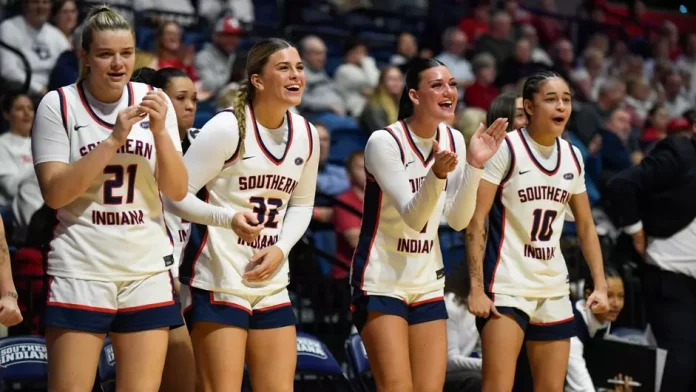
EVANSVILLE, Ind. – The University of Evansville women’s basketball team treks to Iowa this weekend for a pair of conference games, beginning on Friday at Drake. Tip-off from Des Moines is set for 6 PM.
Series History
– Friday marks the 57th meeting between Evansville and Drake
– Drake leads the series 42-14
– Evansville is looking for their first win in Des Moines since 2014
Runner Does it All
– On Sunday at Indiana State, Camryn Runner matched her career-high with 30 points
– The performance was Evansville’s 21st 30-point game in program history
– Against the Sycamores, Runner also became the second player in the country to tally 30 points, nine rebounds, seven assists, and two blocks in a game this season
– Entering the weekend, Runner is the only player mid-major player in the country and one of six players nationally to average 17 points, 5.5 rebounds, 4.5 assists, and 1.5 steals per game
Leveling Up
– At Indiana State, freshman Sydney Huber notched a new career-high with 18 points, sinking four three-pointers
– All 18 of Huber’s points came in the second half
– This season, the sharpshooter has connected on 31 three-pointers (7th in MVC) and scored 7.2 ppg
– In conference play, Huber has upped her scoring to 9.9 ppg
Eagles down Panthers for fifth win in a row
USI takes streak into Friday’s new game date against Western Illinois
EVANSVILLE, Ind. – University of Southern Indiana Women’s Basketball opened its season-long four-game homestand inside Liberty Arena on Thursday night with a 73-57 victory against Eastern Illinois University for the Screaming Eagles’ fifth consecutive overall win and eight straight win at home.
Following Thursday’s triumph and a loss by Western Illinois University earlier in the evening at Morehead State University, USI Women’s Basketball (14-4, 8-1 OVC) moved into sole possession of first place.
In Thursday’s win, junior forward Chloe Gannon dropped a game-high 21 points, one off her career-best 22 points from earlier this season. Gannon was 9-17 from the floor and added six rebounds. Senior guard Ali Saunders tallied 14 points with four boards and seven assists. Junior guard Sophia Loden recorded 12 points with five rebounds.
Collectively, USI shot for over 43 percent (30-69) overall with four triples and went 9-17 at the foul line. The Screaming Eagles had a season-low seven turnovers while forcing 21 EIU turnovers on the defensive end, including 12 takeaways by the USI defense. The Eagles outscored the Panthers 46-20 in the paint.
Eastern Illinois, which had two players finished in double figures, was just over 40 percent shooting from the floor (22-54), had five three-pointers, and went 8-10 at the charity stripe. The Panthers matched the Eagles with 37 rebounds.
Following a defensive start to the contest with nearly four scoreless minutes, Saunders got USI on the scoreboard first. Saunders scored twice more over the next couple of minutes to push USI to an 8-2 advantage just past the five-minute mark of the opening quarter. With 2:15 left in the first period, Saunders drained a three-pointer followed by a layup by junior guard Shannon Blacher to give the Screaming Eagles a 15-7 lead through the first 10 minutes.
Sophomore guard Lexi Sepulveda came off the bench and scored a pair of buckets for a spark in the early minutes of the second quarter. By the halfway point of the second, USI claimed a nine-point lead, 25-16. A minute later, the Eagles’ lead reached double figures, 27-16, on an inside look by Gannon. Gannon tacked on another bucket with two minutes left in the first half. USI ended up taking a 33-22 lead into halftime.
Gannon started the second half where she left off at the end of the first half, connecting on a jumper to reach double digits for the game. Eastern Illinois tried to bring the deficit back to within single digits, but Blacher answered twice to keep USI ahead by more than 10 points. Thanks to another made basket by Gannon, the Screaming Eagles led 44-32 at the midway point of the third quarter. While Eastern Illinois cut back to within seven, USI responded as Gannon kept rolling offensively and a late make by Loden gave USI a 53-41 lead through three quarters of play.
Loden picked up where she left off at the end of third, scoring eight straight points within the first 1:15 of the fourth period to increase USI’s lead to 20, 61-41, and joining Gannon in double figures. A few minutes later, Saunders went into takeover mode with a three-point play and then scoring another layup to also hit double digits for the contest. Gannon reached the 20-point threshold just past the five-minute mark of the fourth, as the Eagles led 68-51. The final exclamation point in Thursday’s win came when freshman forward Alli Robertson drained a straightaway three in the final minute.
The Screaming Eagles are back in action inside Liberty Arena on Friday at 5 p.m. when USI hosts Western Illinois University. The game was pushed up from Saturday to Friday due to inclement winter weather in the forecast on Saturday. Friday’s game, featuring a battle of the top two teams in the Ohio Valley Conference standings, can exclusively be seen with a subscription to ESPN+ and heard on The Spin 95.7 FM and WREF 97.7 FM.
USI loses overtime battle with EIU, 59-51
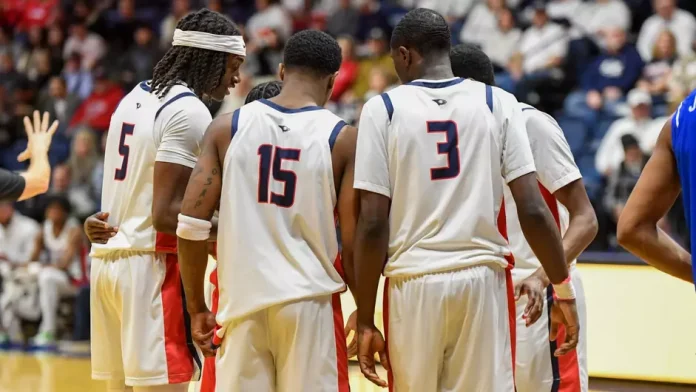
EVANSVILLE, Ind. – University of Southern Indiana Men’s Basketball lost an overtime battle with Eastern Illinois University, 59-51, Thursday evening at Liberty Arena. The Screaming Eagles go to 4-14 overall and 1-7 in the OVC, while the Panthers are 8-11, 4-4 OVC.
USI senior guard Ismail Habib hit a three-pointer and junior forward Tolu Samuels posted a layup to get the Screaming Eagles a 5-0 lead to start the game. The Eagles would extend the lead to seven, 11-4, with 12:26 left in the half.
After hitting an offensive drought for five minutes, USI junior guard Amaree Brown added four free throws on back-to-back trips to push the lead to eight, 15-7. The Eagles would go on to extend the margin to 10 points, 24-14, on a driving layup by senior forward Ola Ajiboye.
The Panther, however, would chip away at the USI lead and close to within three at the intermission, 27-24.
EIU would start the second half by knotting the score 29-29 in the first three minutes of the second half. USI would re-extend the margin to five points twice before the Panthers muscled their way back into a tie, 39-39, with 10:20 left.
After USI regained the advantage, 41-39, on a driving layup by Habib, EIU scored five unanswered to take its first lead of the game, 44-41. Senior guard Steven Clay put the Eagles back into a tie, 44-44, on a three-pointer, while Samuels gave the Eagles back the lead, 46-44, on a dunk with 4:11 to play.
The Panthers would outscore the Eagles in the final four minutes, 6-4, and force overtime. USI had the ball with 13 seconds to play but was not able to convert before the final buzzer in regulation.
In overtime, USI got the initial lead, 51-50, on a free throw by Brown before EIU took command to win the overtime 9-1 and the game, 59-51.
Brown and Habib led the Eagles in scoring with 17 points and 12 points, respectively. Samuels recorded his seventh double-digit game on the boards with a game-high 11 rebounds.