Wildlife recover thanks to Indiana’s Nongame Wildlife Fund
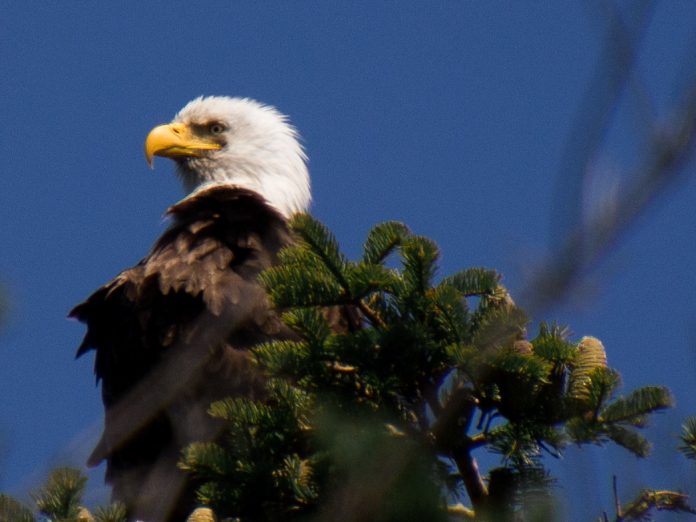
This year, we are observing the 40th anniversary of the Indiana Nongame Wildlife Fund through a series of 40 stories across 12 themed months. This July, our 40 stories series spotlights wildlife recoveries in Indiana. The Nongame Wildlife Fund and its donors, partners, and volunteers have made these accomplishments possible. From re-establishing Indiana’s bald eagle population, to growing the population of Allegheny woodrats, this month focuses on efforts to re-wild Indiana. Read more from our 40 stories map here or watch this video to learn more about Indiana’s historic efforts to recover the bald eagle.
Reeling in the heat
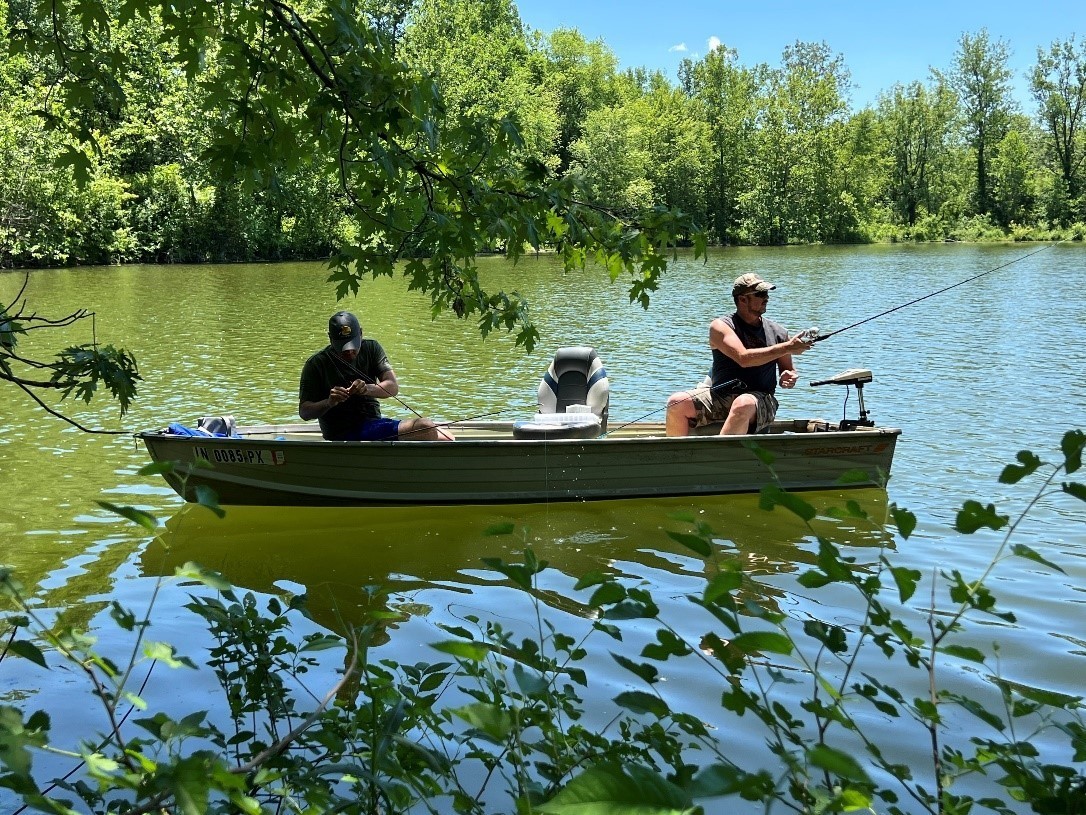
Temperatures are rising, and summer is officially here. Now’s the time to wade a creek and wet a line! There’s no better pastime than fishing from a boat out on the water, so renew your fishing license today.
Being outside with family and friends is a great way to unwind and connect. Whether you’re out on the water or wishing you were, we’re here to help you plan your next fishing adventure today:
Good luck, be safe, and have fun this summer!
Fishin’ Pond volunteers needed
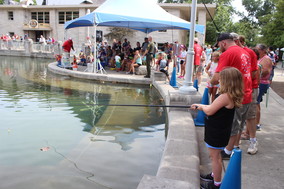
Indiana DNR is seeking volunteers to help youth fish at the State Fair Fishin’ Pond. As a volunteer, you can register families on-site, work with kids as they fish with cane poles, or tie fishing knots and untangle lines. The Fishin’ Pond will be open on the fair’s opening day (July 29), as well as Thursdays, Saturdays, and Sundays from 10 a.m.–1 p.m. and 4–7 p.m. Volunteer shifts last four hours, and volunteers receive free parking, a free ticket to the fair, and a free T-shirt. At the Fishin’ Pond, there are opportunities for everyone to help us introduce fishing to more people.
If you are interested in volunteering, please sign up here. Help us get everyone hooked on fishin’! |
First set of reserved draws opened July 1
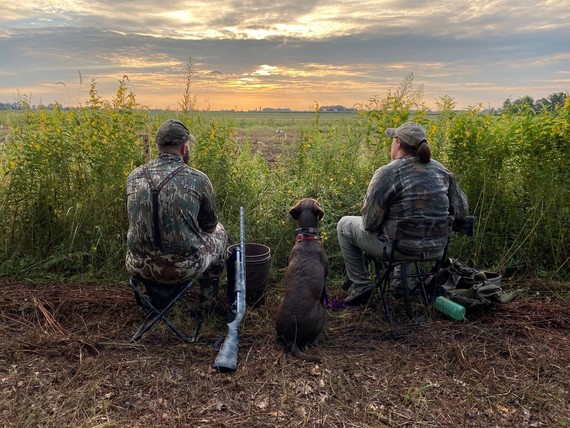
Now through Aug. 1, hunters can apply online for the following reserved hunts by visiting on.IN.gov/reservedhunt. Applications must be submitted by 11:59 p.m. ET. on Aug. 1 for these hunts:
- Dove hunts at Atterbury, Goose Pond, Jasper-Pulaski, Kankakee, Kingsbury, Pigeon River, Willow Slough, and Winamac Fish & Wildlife areas (FWAs).
- Muscatatuck National Wildlife Refuge youth deer hunt on Sept. 24-25.
- Indiana Private Lands Access (IPLA) reserve hunts for squirrel and youth deer on private lands. View the hunt dates and locations when applying.
Four-state steelhead broodstock collection starts
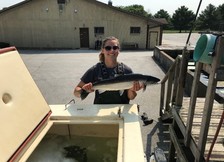
Bodine State Fish Hatchery has begun its annual collection of adult Skamania steelhead. DNR personnel collect the fish at the sea lamprey barrier in Trail Creek. They transport the collected steelhead to Bodine, where they remain until the fish produce eggs for collection in January. The broodstock program serves as an integral part of a cooperative effort between Indiana, Wisconsin, Illinois, and Michigan to raise more than 200,000 Skamania for Lake Michigan’s waters.
Skamania steelhead begin their annual spawning migration in June as 3-year-old fish weighing eight to 12 pounds. Anglers everywhere highly regard the summer-run strain for their acrobatics and target them nearly year-round in the St. Joe River, Trail Creek, Salt Creek, and Little Calumet River. Find out more about fishing regulations and where to catch steelhead on our website. |
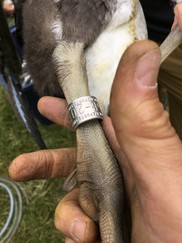
Gone goose-banding
From mid-June to early July, DNR biologists band Canada geese. By placing uniquely numbered bands on migratory game birds, biologists can track important information about the birds’ harvest, survival, and movements.
Indiana’s breeding geese roam much farther than many people think. Hunters from Idaho and Delaware to Alabama and Canada have harvested birds banded in June in Indiana. These geese are not “resident†birds; rather, they serve as an important shared resource across state and national boundaries.
Other migratory game birds banded in Indiana include mourning doves, wood ducks, and mallards. The DNR encourages hunters to check any bird they harvest for a band and to report all bands to the Bird Banding Laboratory, part of the U.S. Geological Survey, at www.reportband.gov. Most bands are reported by hunters, but the DNR asks anyone who finds a banded goose or other migratory bird to report them as well. |
Wear it Indiana!
Your personal flotation device, that is. Your PFD. Your life jacket. No matter what you call this life-saving piece of equipment, remember to wear it while boating or swimming. Wearing a life preserver can prevent most, if not all, lives lost on the water. |
|
 |
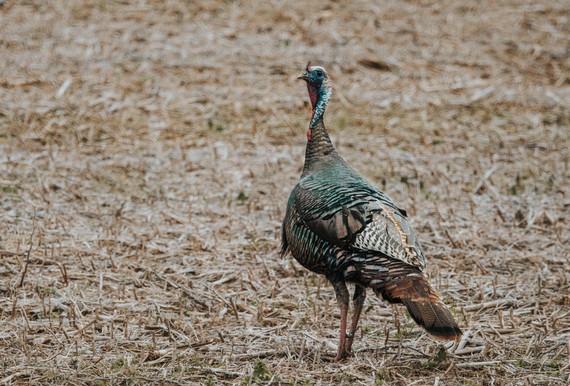
2022 spring turkey season results
During the 2022 spring season, hunters harvested 12,531 wild turkeys in 91 of 92 Indiana counties. This spring’s harvest is only a 1.7% increase compared to that of the 2021 spring season. Like last year, only one county did not harvest any turkeys during this spring’s hunting season.
Spring harvests increased in 47 counties with seven counties exceeding 300 birds, compared to five in 2021. A total of 1,376 birds (11% of total harvest) were taken during the youth-only weekend prior to the regular season. The estimated number of hunters afield changed very little from 57,621 in 2021 to 57,459 in 2022, but estimated hunter success increased to 22% in 2022 compared to 21% in 2021 and 19% in 2020.
A detailed breakdown of spring harvest data, including previous seasons, is available on the wild turkey spring harvest data website.
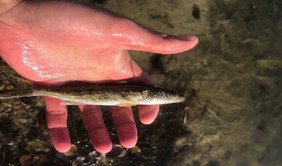
Watching walleye multiply
Because small walleye fingerlings tend to have higher mortality rates in Indiana’s clear, northern lakes, DNR fish biologists have adjusted their stocking process. In the spring, Fawn River State Fish Hatchery receives 1-2 inch walleye fingerlings from Brookville Reservoir and grows them until they are 6-8 inches in length before stocking them into northern Indiana lakes. Through this modified process, combined with a goal of raising 30,000 fish annually, biologists seek to increase walleye populations and improve survival rates. You can learn more about where the state stocks walleyes and how you can fish for them on our website. |
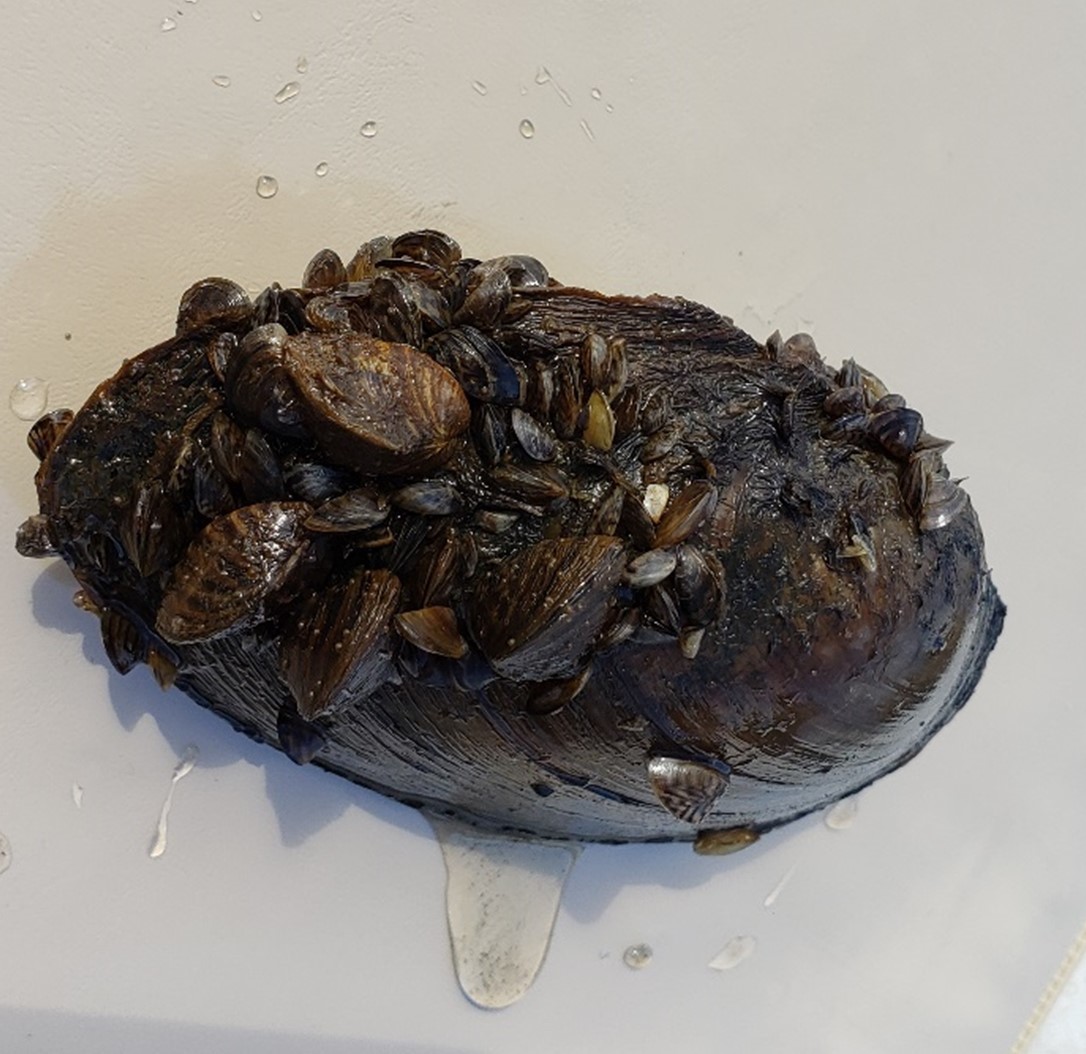
Help stop the spread of aquatic invasive species
From June 24 – July 10, DNR and several Indiana conservation organizations gather and take part in the fourth annual Great Lakes Aquatic Invasive Species Landing Blitz. Aquatic invasive species are plants, animals, and other organisms that are not native to Indiana’s waters and can harm the environment around them. If you’re out on the water during these weeks, you may see DNR staff and local volunteers at boat launches and docks at Monroe Reservoir, Patoka Reservoir, Bass Lake, Summit Lake State Park, Lake Wawasee, Syracuse Lake, Webster Lake, and other wildlife areas. The DNR staff and volunteers will be helping boaters, anglers, and other individuals check their watercraft and other equipment for aquatic invasive species and educate them on preventive measures.
 |
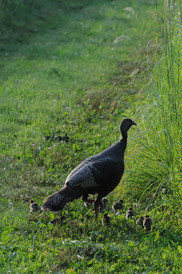
Record turkey brood observations this summer
Around this time of year, wild turkey young, known as poults, are about the same size as a softball. Have you seen any with a wild turkey hen? These observations help Indiana DNR biologists calculate the annual wild turkey Production Index, which measures the number of poults per adult hens. By estimating wild turkey populations in the state, the Production Index helps provide guidance for future species management.
Indiana DNR biologists can’t collect brood observations alone. To reach our goal of 3,000 observations this year, we need your help! To share your turkey brood observations with DNR, visit on.IN.gov/turkeybrood and record observations any time from July 1 to Aug. 31. Recording observations takes less than five minutes, and no password is required.Â
The DNR couldn’t create our Production Index without you—we appreciate your reports.
|
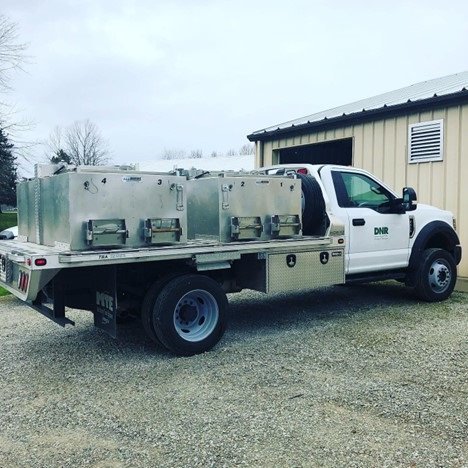
See the DNR in action at the State Fair
The 2022 Indiana State Fair is coming up! The fair begins July 29 and runs through Aug. 21 (closed on Mondays and Tuesdays). This year’s indoor theme for the DNR building features the tools we use to conserve Indiana’s fish, wildlife, and their habitats, including automobiles, machines, and more. Visit our building on the back half of the fairgrounds to see the unique equipment from the Division of Fish & Wildlife. Beginning Aug. 10, the indoor tanks and outdoor ponds will be filled with fish from the Cikana Fish Hatchery.
Remember to plan your trip to the State Fair with the The Fishin’ Pond in mind! The Fishin’ Pond will be open every Thursday, Saturday, and Sunday from 10 a.m. – 1 p.m. and 4 p.m. – 7 p.m. The Pond will also be open on the fair’s opening day, Friday, July 29, from 10 a.m. – 1 p.m. |
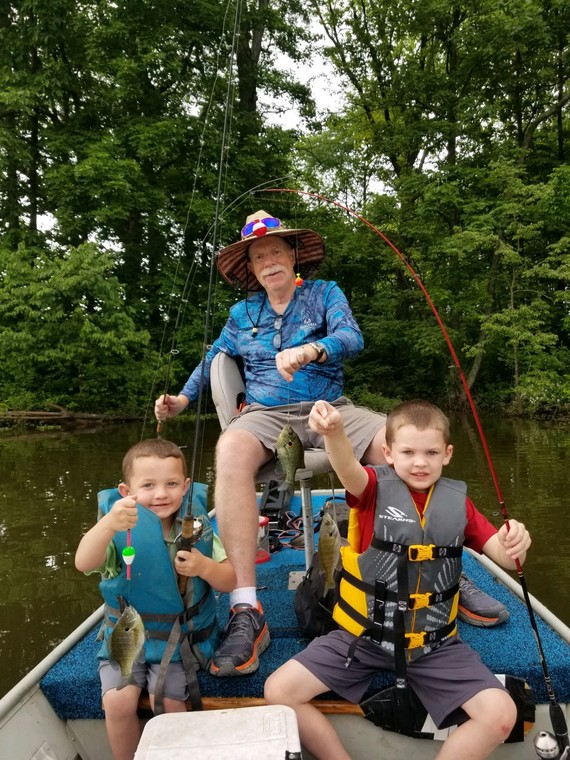
Dove Hollow Marsh Fishery on track after collaborative lake renovation
In 2019, the Glendale Fish & Wildlife Area drafted plans for Dove Hollow Marsh to replace the water control structures, restore the boat ramp, and contour the shoreline along the dam. The planners also proposed to create fish salvage and eradication operations, as well as complete a total fish restocking. This joint Division of Fish & Wildlife project involved the Glendale Fish & Wildlife crew, Public Access South, Cikana, Driftwood, East Fork and Fawn River Fish hatcheries, and District 5 fish management.
One month into the process of stocking fish in 2021, Hurricane Hanna made landfall in Texas and brought its downpour to Indiana. After receiving great amounts of rain, the Marsh’s projects were placed on hold until the weather stabilized. This June, biologists evaluated the fishery’s progress and found that the fish’s growth two years later is well above average, confirming that the Dove Hollow Fishery is on its way to recovery and will provide wildlife habitat and fishing opportunities for decades to come.
Recent news releases
Walleye and saugeye stocked this spring await anglers
Reserved hunt applications open July 1 under new system
Brown trout stocked in two northeast Indiana bodies of water |


 Easily apply