Operations are returning to normal at Bally’s after a strange incident this morning.
In the midst of the normal morning routine at Bally’s Casino, the sense of normal disappeared in one frightening moment when a car came crashing through the roof of the conference center. That car came from the top floor of the attached parking garage.
At the time of the crash, Koorsen Fire and Safety was hosting a conference for building inspectors and firefighters at the site. Koorsen is the fire protection company for Bally’s, and they aided in getting the building’s systems turned off. Firefighters and others attending the conference rendered aid at the scene.
The vehicle hit a concrete barrier, causing it to drop through the roof of the conference center, followed by the Ford SUV. The driver of the vehicle was the only injury.
A crane was brought in during the afternoon to lift the SUV and the concrete barrier out of the conference center.
The unanswered question is, “Why?” Police are putting together all of the information, looking at video footage, and planning to talk to the driver to determine what happened.
Bally’s was able to continue with normal casino operations through the day today and the parking garage will remain close until further notice.
Bally’s released the following statement: “We are currently investigating an incident involving a vehicle that drove off the seventh floor of our parking garage and will provide updates as necessary. Upon initial review, the incident appears to be the result of driver error. There are no signage or structural issues with the parking garage. The safety of our guests and staff remains our top priority.”
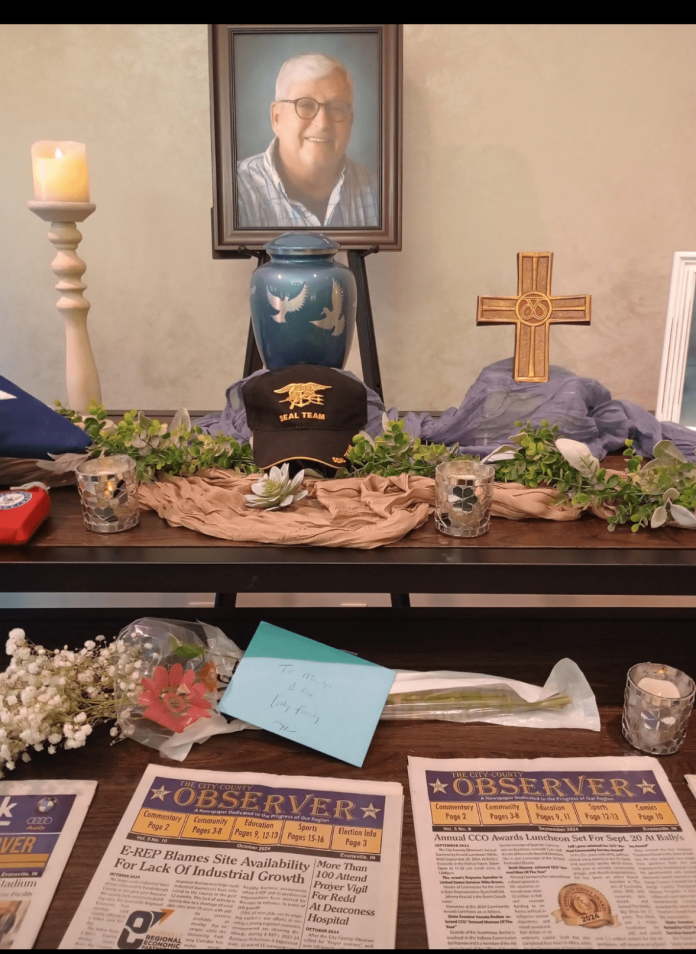
It is with a heavy heart that we share this message with everyone who has followed the City-County Observer for more than two decades. As of February 1, 2026, there will be no further publications of the City-County Observer.
With Ron’s passing, continuing his legacy has been incredibly difficult. This paper was truly his passion, and it meant a great deal to him to keep the community informed.
We are deeply grateful to all who supported and read the paper over the years, especially those who enjoyed “Is It True?” and the many articles that sparked conversation and kept readers engaged.
As we close this chapter, we do so with a salute to Ron and the work he dedicated so much of his life to.
The Faith and Values weekly Sunday meditation has been well received by the many subscibers to the CCO.. It will continue uninterrupted at the blog of theword120.com as usual every Sunday.
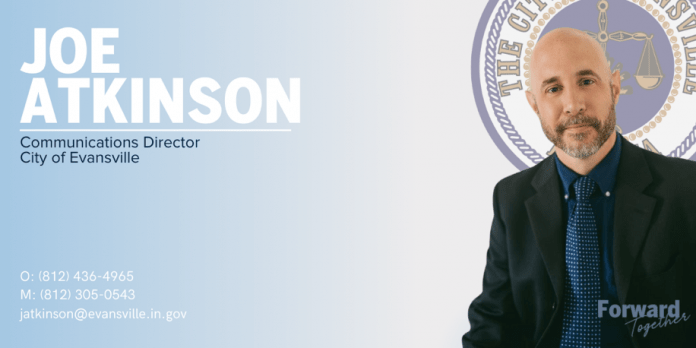
I want to write to all of you this morning to let you know that I have accepted a new position outside of city government. My last day in the Mayor’s Office will be Tuesday, February 10.
This wasn’t something I anticipated or sought out, but an opportunity presented itself that I did not feel I could pass up. I look forward to talking more about that at the appropriate time; for the moment, I am focused on continuing to serve Evansville residents in my current role, and to providing as smooth a transition as possible.
I want to thank Mayor Terry for the opportunity to serve in her administration. For the past two years, I have had the opportunity to work alongside an amazing team – from my colleagues in the Mayor’s Office; to the city department heads; to the countless employees who work tirelessly, every day, to provide the services Evansville residents count on. I’ve been proud to play a role in implementing Mayor Terry’s platform – a platform I strongly believe in and support, and one I look forward to watching her and her team continue to execute for the remainder of her administration.
I also want to thank all of you. I’ve enjoyed working with you to keep the public informed, and expect I will still be in touch with many of you in my next chapter. As I said: I’m excited to talk about that soon.
In the meantime, I will remain your primary contact for the city until February 10, after which you may contact Ella Johnson-Watson at 812-760-5089, or ejwatson@ewsu.com, on an interim basis, until the Communications Director position is filled.
Legislation promoting charity care and payment plans for Hoosier health care patients — plus, protecting their paychecks and homes from debt collectors — advanced from Indiana’s Senate on Thursday, in a 33-15 vote that splintered the chamber’s Republican caucus. It next heads to the House for consideration.
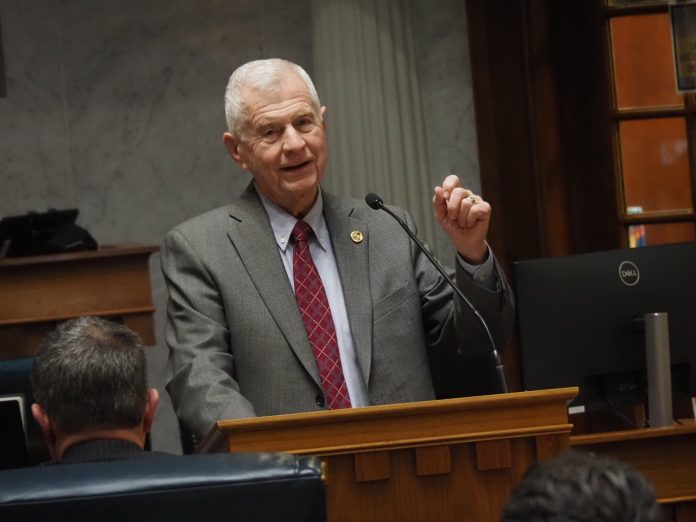
“I’ve had two massive medical bills for having cancer two times,”said Sen. Ed Charbonneau, R-Valparaiso. “I talked to the hospital, and I’ve got a payment plan. They want to get their money, and I want to pay my bill.”
“The people that we are helping with this bill … don’t even know, in many instances, that there is such a thing as a payment plan,” added Charbonneau, who emphasized that such information is often “on page 55 of 100 pages of documents that they get when they check out of the hospital.”
“They’re not going to see that,” he said.
Charbonneau’s Senate Bill 85 deals with medically necessary care.
It would require hospitals to offer payment plans to patients earning less than 400% of the federal poverty line — about $64,000 for a single-person household — or whose bill amount is more than 10% of their monthly household income.
Payment plans would have to extend for at least 24 months, and any one monthly payment couldn’t exceed 10% of the patient’s gross monthly household income. Interest rates would be capped to 3% annually. If insurance coverage is denied, payments would pause while patients appeal the decision for up to 120 days, or until that process is exhausted.
“All we’re trying to do here is to make sure that they get paid,” Charbonneau said of hospitals.
Facilities would also have to develop written notices about any charity care programs they operate, with instructions on how to apply. They’d post the notices in emergency room waiting areas and provide them to patients during intake or discharge — and include a statement that financial assistance is available on billing statements, with a phone number and website link.
Hospitals grossing at least $20 million annually would face additional steps. They’d have 14 days to respond to patients who’ve asked if they’re eligible for charity care programming or payment plans. If patients qualify, the written notices must offer to register them and provide enrollment instructions.
Other provisions would set limits on debt collection.
Collectors could not garnish the wages of patients making 200% or the federal poverty line — an income of about $32,000 annually for one person — and for higher earners, could only take up to 10% of their weekly disposable income above the 200% threshold. Under current law, courts may garnish up to 25% of a patient’s wages to repay medical debt.
“It does not, it does not, it does not remove the obligation for the patient to pay the bill,” Charbonneau stressed. “If there’s a concern about them not paying the bill, well, they had the concern long before this bill.”
Senate Bill 85 also blocks liens or forced sales of patients’ homes over medical debt, but doesn’t, according to Charbonneau, prevent debt collectors from filing lawsuits against patients.
Senate Minority Leader Shelli Yoder, D-Bloomington, answers reporter questions on Thursday, Jan. 29, 2026. She is flanked by members of her caucus, including Sen. Fady Qaddoura, D-Indianapolis. (Photo by Leslie Bonilla Muñiz/Indiana Capital Chronicle)
The state’s attorney general would be able to enforce the garnishment and home provisions, and would have to establish a complaint process for Hoosier patients to file against medical creditors and debt collectors.
Thursday’s tally featured a supportive coalition of 23 Republicans and all 10 Democrats, easily outweighing the 15 GOP “no” votes.
Democrats have long sought to get such language across the legislative finish line.
Sen. Fady Qaddoura, D-Indianapolis, “made sure to address every single concern that came out of the last couple of years,” said Senate Minority Leader Shelli Yoder, D-Bloomington. “… One by one, (he) checked off those concerns and continued building those relationships.”
Qaddoura, a second author on the bill, told his colleagues that approximately 1.2 million Hoosiers would be positively impacted within a few years if it becomes law.
“With gratitude, with love and respect, I appreciate you for giving this bill a chance,” he said. “And I hope that we can continue to work on it.”
Erin Macey, director of the Indiana Community Action Poverty Institute, called the vote a huge step forward.
“Amidst all the challenges we’re seeing, movement on these medical debt bills suggests that legislators are listening. We hope they keep listening and recognizing the crisis that so many hard-working households are facing in trying to access essential healthcare.”
What turns a passing incident into a legend? Fear is often involved or at least, apprehension. Hatred perhaps or maybe just sublimated envy. Villains and heroes, sinners and saints, hangers-on and barely aware casual observers may be recognized or may be unnoticed. Accurate observations may be misidentified while surmise and self-fulfilling yearnings might be confused by societies distracted by the sturm und drang of living. What we can be assured is that an occasional legend is required if we are going to sublimate our daily ennui and manage to muddle through.
Great legends of history often arise on a “just-in-time, just-in-place” happenstance. Often, they appear as individuals but, more often, individuals are named while the legends involve groups. Military exploits such as Achilles and the Greeks at Troy, or Eisenhower and the Allies at D-Day are examples. Rosa Parks and Martin Luther King led, but many others also sacrificed. It is impossible to honor or even acknowledge the millions who contributed to the legends, so we usually coalesce upon one or a very few to crown with being the legend. There is nothing we can do about this human approach; we are human.
Another area we choose in which to anoint representative heroes is athletics. The legends are often only cogs in the great Circle of Life that helps the hero showcase his or her talents but who would not advance without many spokes supporting them. Fortunately, often our legends recognize and acknowledge these facts and often say so as they share the credit.
So, as we glorify Curt Cignetti and Fernando Mendoza and all the rest of the 2025-2026 Indiana Hoosier football team who are the College Football National Champions, as well we should, we should follow their lead and thank the many before them and along with them who helped them inspire us. Here’s to ball-boys, water-girls and the generous boosters among countless others such as IU’s administration.
One of the best attributes of current glory is, if our contemporary heroes have character, and these do, they acknowledge the foundation upon which they stand and often refer to our heroes of IU’s illustrious more than 200-year history. When the media dwells upon past losses we should remind the world of past glories. Indiana University was founded in 1820, not 2024.
When I would walk across the Indiana campus from the Law School to the Gables Restaurant, I often thought of that other law student, Hoagy Carmichael, who had been in there dreaming of “Stardust” when he probably was supposed to be trying to fathom the intricacies of Marbury v. Madison (1803). But what always drew my attention was the gigantic mural above the Gables lunch counter that portrayed our undefeated football team of 1945; war veterans who had helped save the world while enhancing IU’s proud history.
And another good aspect of our 2025-26 Rose Bowl Champions is their exploits recall those of our 1967-68 Rose Bowl team. It has been particularly gratifying to see Coach Lee Corso on TV giving credit to our 1979 Holiday Bowl victors. Neither Curt Cignetti nor countless others failed to honor our university’s long and proud history of culture and accomplishments. IU’s record of football losses is a mite in the pantheon of our proud traditions. Our 2025-26 team is our most recent reminder, we are not losers, we are Hoosiers!
The current chapter of the IU legend may be a new beginning or but a moment. Regardless, it is sure fun now and that is due to the efforts of a whole lot of other dreamers who are, after all these years, as amazed and gratified as Peg and I and the rest of the long cream and crimson line of co-commiserators and winners are.
Evansville, IN – March 7, 2026 – The Junior League of Evansville (JLE) will celebrate 100 years of service and community impact with a Centennial Gala on Saturday, March 7, 2026, at Venue 812.
Founded in 1926, JLE has invested more than $1 million and countless volunteer hours to support women, children, and families across the Evansville community. Signature projects include the Koch Family Children’s Museum of Evansville, Wesselman Woods Nature Center, the Reitz Home Preservation Society, Hillcrest Washington Youth Home, and the Neighborhood Food Market, which addresses local food insecurity.
“The Centennial Gala honors our legacy while looking ahead to the future,” said Stephanie, President of the Junior League of Evansville. “For 100 years, our members have been dedicated to strengthening our community.”
The formal evening will include dinner, entertainment, and a program recog
FOOTNOTE: EPD DAILY ACTIVITY REPORT information was provided by the EPD and posted by the City-County-County Observer without opinion, bias, or editing.
For over two decades, the City-County Observer has been a recognizable and trusted name in local digital journalism. Built during a time when community-focused reporting mattered most, the Observer established itself as a platform for government transparency, civic dialogue, and independent reporting. Today, it presents a rare opportunity: the chance to acquire a legacy online newspaper with an established brand, existing readership, and significant growth potential.
A Recognized Name with Community Credibility
The City-County Observer is not a startup—it is a known entity. The name carries weight in the community, particularly among readers who value local government coverage, public accountability, and independent commentary. In an era when local journalism is disappearing, this publication represents something increasingly rare: brand recognition tied to civic trust.
For the right buyer, the City-County Observer is more than a website—it is a foundation. One that can be revitalized, expanded, and positioned for long-term success in the future of local media.